
THE WASH PROBLEMS AND BRIEF HISTORY OF RWESCK
Water is the bedrock of healthy living, biodiversity, food production and security, energy generation and most industrial processes. A lack of access to safe water translates into slower economic growth. Some regions in Africa could see their GDP decline by up to 6% by 2050 due to water-related stress. Rising populations, expanding economies, and shifting consumption patterns have intensified demand for water resources, even as 36% of the world’s population lives in water-scarce regions. More than 2 billion people live in highly water-stressed countries, and about 4 billion people experience severe water scarcity for at least one month each year (WWAP 2019). Water stress is expected to worsen as global water demand continues to rise. In fact, water consumption has increased sixfold over the past 100 years and continues to grow. (UNESCO and UN-Water 2020). Projections indicate that by 2050, global water demand will increase by 20% to 30% has increased unless consumption patterns change significantly (WWAP 2019). In Africa, it is well known that 15-20% of deaths are linked to water, excreta-related diseases. Addressing this crisis requires urgent actions to bridge human resources capacity gaps and improve infrastructure to train high-calibre professionals to tackle WASH-related challenges. The region also faces limited capacity for integrated water resources management, alongside pressing issues such as irrigation development, which is vital for climate change adaptation and food security. Solid and liquid waste management remains a major challenge, with insufficient technological capacity to support waste-to-energy, briquettes production, composting, and other useful transformations. Faecal sludge management and waste handling continue to be significant burdens.
Another critical deficiency is the lack of digitised applications for waste management and computing systems. Compounding these challenges are the mismanagement of utility services, poor handling of waste from garages and mining operations, siltation of water bodies, and uncontrolled sand weaning- all of which worsen the state of water and sanitation in the region. In the early 1990s, the Environmental Engineering section of the Department of Civil Engineering conceived and initiated the Water Supply and Environment Sanitation project with the primary aim of developing capacity in Ghana’s WASH sector. At the time, the sector was burdened by very limited capacity and resources – critical infrastructure was virtually non-existent, and there was a lack of financial support to establish well-equipped laboratories capable of conducting multidisciplinary, sector-relevant research.
RWESCK is one of the eighty (80) Africa Centres of Excellence (ACE), located across more than fifty universities in twenty countries across the continent. These Centres deliver quality education, foster regional specialisation, and provide outstanding mentorship and internship opportunities. RWESCK specifically focuses on addressing water resources and environmental sanitation challenges in Ghana and Sub-Saharan Africa. As a flagship research centre within the Department of Civil Engineering at KNUST, RWESCK benefits from and leverages strong collaborative linkages with other research centres and departments within the College of Engineering. This multidisciplinary collaboration enriches its academic delivery and enhances the integration of classical engineering principles- especially those related to water purification, infrastructure, water supply systems and water engineering into practical applications. In this context, the Centre has championed initiatives related to the water-Food-Energy-Health nexus, conducting research and hosting events aimed at promoting the national socio-economic development, enhancing the sustainability of our water-related infrastructure, and addressing the pressing challenges of climate variability and change currently facing the continent.
The Dutch initiative
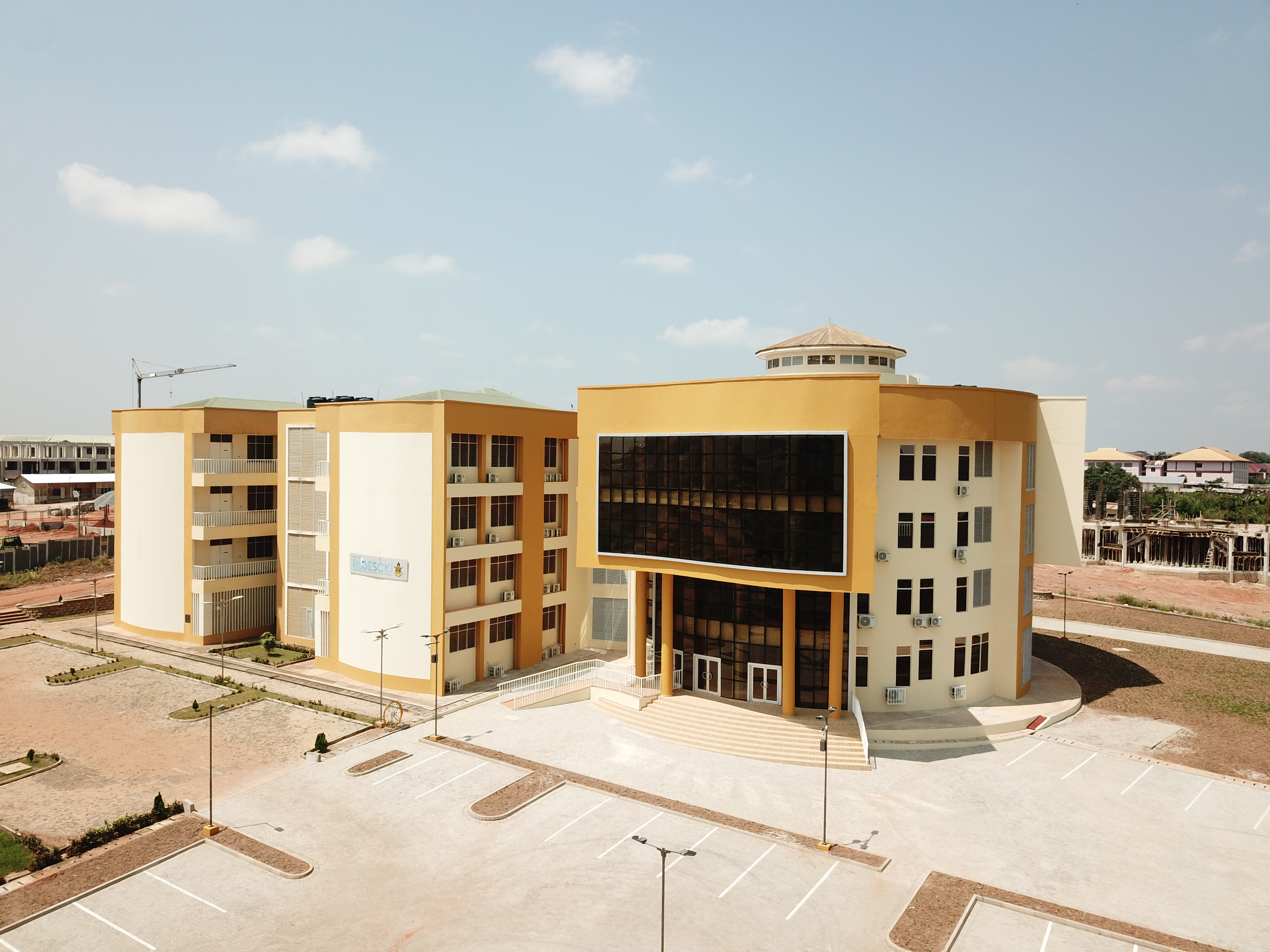
In 1996, the Water Supply and Environmental Sanitation Project (WSESP) was established with financial support of 2 million Euros from the Government of the Netherlands. In 2004, the WSESP revised its operations and structure and was renamed the Water Resources and Environmental Sanitation Project (WRESP). During this period, an additional 1.5 million Euros was provided by the same source, with the overarching goal of expanding operations and broadening the scope of capacity development and mentorship. A new phase of WRESP emerged through a collaborative initiative between the Government of Ghana and the World Bank, leading to the transformation of WRESP into the Regional Water and Environmental Sanitation Centre, Kumasi (RWESCK), which operated under the first phase of the Africa Centres of Excellence (ACE) project from 2014 - 2019. Under the second phase of the ACE project, RWESCK received an unprecedented US$8 million in financial support from the World Bank. This support was a game-changer, significantly boosting infrastructural development, including the construction and improvement of laboratories, lecture theatres, auditoriums, library, computer rooms, conference halls, a cafeteria and office spaces. Beyond infrastructure, the funding also enhanced professional training for faculty, strengthened research and customised training programmes, and introduced several new postgraduate programmes. The academia-industry interface was also intensified to provide students with increased opportunities for industrial exposure and internships. Recognising the Centre’s positive progress, the World Bank provided additional funding of US$5.4 million under the ACE IMPACT phase, which spanned from 2019 to 2024. Over the years, key questions that have continued to fuel enthusiasm for the Centre’s programmes remain:
What drives technological capacity building?
What inspires creativity regularly?
What motivates innovation?
What will promote the Academia-Industry partnership consistently?
What will enhance entrepreneurship in all sphere of the Centre's activities?
With these questions in mind, some thematic areas were couched for the Centre's academic programmes
Theme 1: Innovative Water Treatment Technology
Theme 2: Innovative Water Distribution and Digital Technology
Theme 3: Environmental Sanitation and Waste Management Technology
Theme 4: Climate Resilience and Water Resources Management
Theme 5: Water and Sanitation Governance
Over the years, Ghana and Sub-Saharan Africa have witnessed a rise in environmental adversities, ranging from acute freshwater shortages and deteriorating raw water quality to complex challenges in water resources management, climate-induced urban and peri-urban flooding and persistent concerns about water-food-energy security. Nationwide, significant efforts have been made to improve sanitation and hygiene; however, the coverage, as stipulated in the Sustainable Development Goals (SDGs), calls for a doubling of efforts to accelerate progress towards achievement. Our meticulously crafted programmes equip students with the necessary skills and expertise to spearhead initiatives that address these pressing challenges while contributing to the realisation of the SDGs and the African Union Agenda 2063.


